
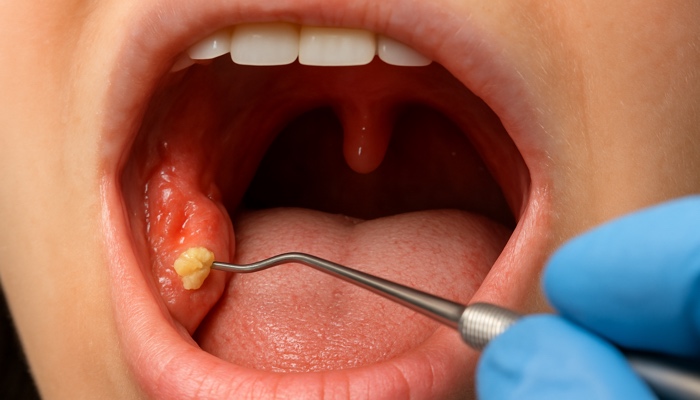

Tonsil stones are one of those things you didn’t know you had until you did—and now you can’t stop noticing them. Those small, whitish lumps lodged in the crevices of your tonsils might be tiny, but they can cause bad breath, a persistent sore throat, and the distinct feeling that something is stuck back there.
If you are looking for how to make tonsil stones fall out naturally, the most effective ways include vigorous gargling with salt water, using a water flosser on low pressure, or gently dislodging them with a cotton swab. Many small tonsil stones fall out on their own when you cough, swallow, or gargle, so it is often best to start with the least invasive methods first.
What Are Tonsil Stones?
Tonsil stones (tonsilloliths) form when debris – food particles, dead cells, mucus, and bacteria – gets trapped in the small pockets (crypts) of your tonsils and calcifies over time. They range in size from a grain of rice to a small pea and have a characteristic white or yellowish color.
They’re not dangerous, but they can cause:
- Persistent bad breath that brushing doesn’t fix
- The sensation of something stuck in your throat
- Mild throat irritation or soreness
- Ear pain (due to shared nerve pathways)
- Difficulty swallowing if they’re large
Methods to Make Tonsil Stones Fall Out
1. Gargling Vigorously with Salt Water
This is the first thing to try – safe, effective, and easy.
How to do it: Dissolve ½ teaspoon of salt in a cup of warm water. Tilt your head back and gargle forcefully for 30-60 seconds, targeting the back of your throat. The pressure and movement can dislodge stones, especially smaller ones.
Do this 2-3 times daily. It also reduces inflammation and kills bacteria that cause bad breath.
2. Water Flosser (Oral Irrigator)
A water flosser set to its lowest pressure setting can be used to direct a gentle stream of water at the tonsil crypt where the stone is lodged. This is one of the most effective methods for visible stones.
How to do it: Stand in front of a mirror with good lighting. Set the water flosser to the lowest setting. Direct the stream at the stone and flush gently. Don’t use high pressure – the tonsil tissue is delicate.
3. Cotton Swab or the Back of a Toothbrush
For visible stones, a damp cotton swab can be used to gently press the tissue below or beside the stone – pushing it upward and out.
Important: Only attempt this if you can see the stone clearly. Use a flashlight and mirror for visibility. Be gentle – pressing too hard can cause bleeding. This method works best for stones near the surface.
4. Coughing
Sometimes the simplest approach works. A forceful cough can dislodge a small tonsil stone that is already partially loose. If you feel something back there but can’t see it, try a few strong coughs directed at your throat.
5. Drinking Plenty of Water
Staying well hydrated helps wash away the debris that forms tonsil stones before they calcify. While this won’t remove existing stones immediately, it’s a key prevention tool.
What NOT to Do
|
Unsafe Method |
Why to Avoid It |
|---|---|
|
Using a pen, pencil, or sharp object |
Serious risk of tissue injury and bleeding |
|
High-pressure water |
Can damage tonsil tissue and cause infection |
|
Aggressive finger prodding |
Gag reflex risk; potential to push stone deeper |
|
Swallowing them on purpose |
They’re harmless, but why would you? |
When Tonsil Stones Keep Coming Back
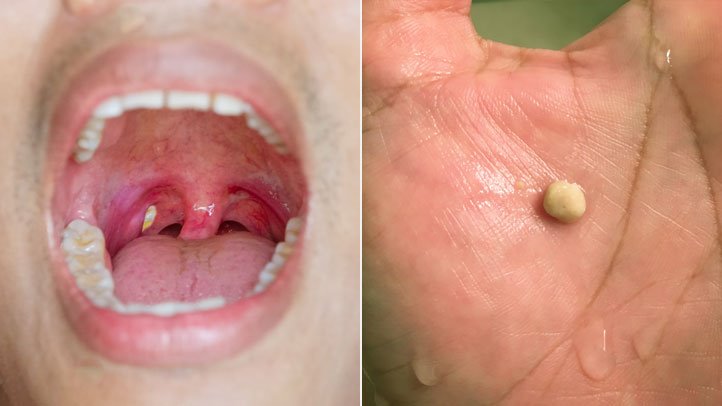
If you’re constantly dealing with them, you’re not alone. Some people are simply more prone due to:
- Larger or deeper tonsil crypts (anatomy)
- Post-nasal drip or chronic sinus issues
- Dry mouth (saliva helps flush debris)
- Chronic tonsillitis
Prevention strategies:
- Brush teeth and tongue twice daily
- Rinse with an alcohol-free antibacterial mouthwash
- Stay hydrated
- Gargle with salt water regularly, not just when you notice stones
- Address post-nasal drip if you have it
Medical Options for Persistent Cases
If tonsil stones keep returning and are affecting your quality of life, speak to a doctor about:
|
Option |
Details |
|---|---|
|
Laser tonsil cryptolysis |
Laser resurfacing of tonsil crypts to eliminate the pockets where stones form |
|
Coblation cryptolysis |
Radiofrequency technique that reduces crypt depth |
|
Tonsillectomy |
Full removal of tonsils – a permanent solution for severe, recurrent cases |
These are not needed for most people, but for those with large, frequent stones causing significant symptoms, they’re worth discussing.
When to See a Doctor
See a doctor or ENT specialist if:
- Tonsil stones are very large (larger than a cherry pit)
- You have significant pain, difficulty swallowing, or fever
- Stones keep returning despite good oral hygiene
- You have severe, persistent bad breath that doesn’t improve
- You notice any unusual growth or change in your tonsil tissue
Bottom Line
Most tonsil stones can be safely dislodged at home with gargling, a water flosser, or a careful cotton swab. They’re not dangerous – just annoying. Good oral hygiene and hydration are the best prevention. If they keep coming back despite your best efforts, a quick visit to an ENT can open up more lasting solutions.